by Diwakar | Aug 16, 2026 | Education Support
Understanding the Role of a Shadow Teacher: How One-on-One Support Helps Children Succeed in School
Every parent wants to see their child walk into school with confidence, make friends, and enjoy learning. But for some children, navigating a mainstream classroom can be overwhelming. Difficulties with communication, attention, social interaction, or emotional regulation can make everyday classroom experiences challenging.
A Shadow Teacher for Children in School provides one-on-one support that encourages independence, confidence, and meaningful participation. At Mind Miracle, our Shadow Training program bridges the gap between home, school, and learning—helping children reach their full potential.
What is Shadow Training?
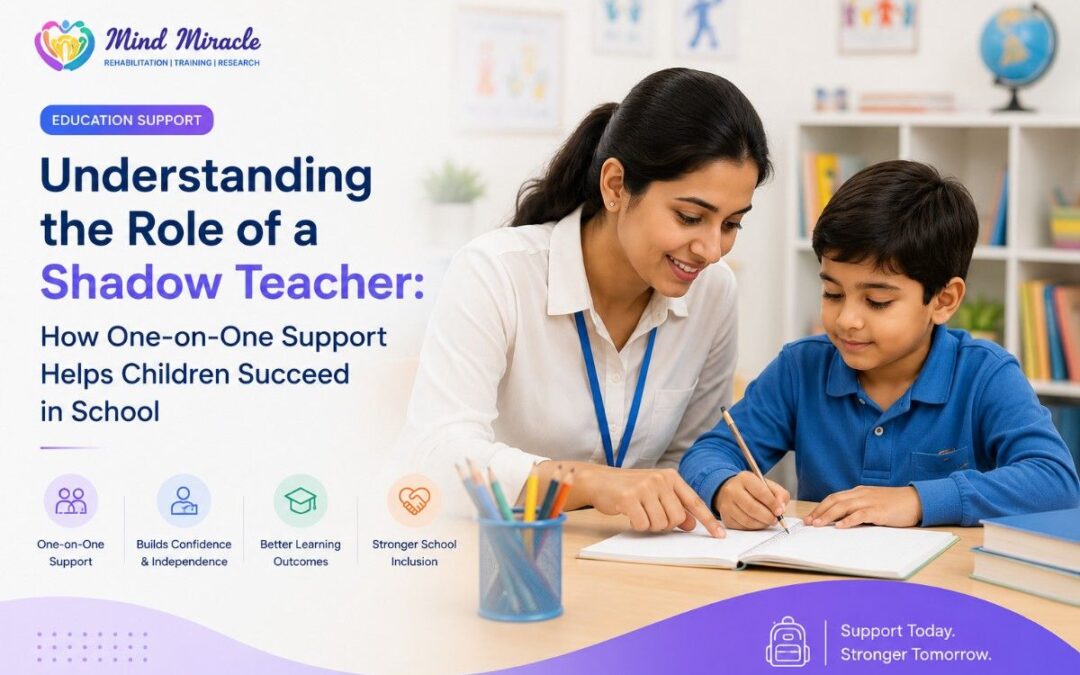
Shadow Training is a specialized educational support service where a trained professional provides one-on-one assistance to a child within a mainstream classroom.
Unlike a classroom teacher, a shadow teacher focuses exclusively on the individual child's learning, communication, behavior, and social development while encouraging them to participate as independently as possible.
Rather than completing tasks for the child, the shadow teacher acts as a guide—helping the child understand instructions, stay engaged, build confidence, and gradually develop the skills needed to function independently in the classroom.
A Bridge Between Home, School, and Learning
One of the most valuable aspects of shadow training in India is the collaboration between families, educators, and therapists.
A shadow teacher works closely with:
- Parents and caregivers
- Classroom teachers
- Special educators
- Therapists
- School management
This collaborative approach ensures consistency between home and school, allowing strategies that work in therapy or at home to be reinforced in the classroom. As a result, children experience a more structured and supportive learning environment that promotes long-term development.
Key Benefits of Having a Shadow Teacher
1. Personalized Classroom Assistance
Every child learns differently, and a one-size-fits-all teaching approach may not meet every student's needs.
A shadow teacher provides individualized classroom support by adapting guidance based on the child's strengths, challenges, and learning pace.
Support may include:
- Helping the child follow classroom instructions
- Breaking complex tasks into manageable steps
- Encouraging participation in classroom activities
- Providing gentle reminders to stay focused
- Assisting with transitions between activities
- Building organizational and study skills
This personalized approach enables children to participate more confidently without feeling isolated from their classmates.
2. Social Interaction and Peer Integration
School is about much more than academics—it's also where children develop friendships, communication skills, and emotional confidence.
Some children may struggle to initiate conversations, understand social cues, or participate in group activities.
A shadow teacher helps by:
- Encouraging positive peer interactions
- Supporting participation in group learning
- Teaching appropriate social behaviors
- Helping children understand classroom routines
- Building confidence during social situations
- Encouraging independent communication
Over time, children become more comfortable interacting with classmates, leading to stronger relationships and greater confidence.
This type of school inclusion support helps children feel like valued members of their classroom community while promoting meaningful participation alongside their peers.
3. Behavioral Regulation and Focus Support
Maintaining attention throughout the school day can be difficult for children experiencing developmental or behavioral challenges.
A shadow teacher provides structured classroom behavior management strategies that help children remain engaged without disrupting the learning environment.
Support may include:
- Positive reinforcement
- Visual schedules
- Calm redirection
- Emotional regulation strategies
- Managing sensory needs
- Encouraging self-control
- Reducing anxiety during classroom transitions
Instead of simply correcting behavior, the goal is to help children understand expectations, develop coping skills, and become increasingly independent over time.
4. Collaboration with Teachers and Parents
Successful child development requires teamwork.
A shadow teacher serves as an important communication link between parents, teachers, and therapists by sharing observations, discussing progress, and recommending strategies that support the child's development across different environments.
Benefits of this collaborative approach include:
- Consistent learning strategies
- Shared developmental goals
- Regular progress updates
- Early identification of new challenges
- Better communication between home and school
- Coordinated intervention plans
When everyone works together, children receive consistent guidance that strengthens learning and development.
Who Can Benefit from Shadow Training?
Shadow Training can benefit children who require additional support to participate successfully in mainstream educational settings.
Children who may benefit include those with:
- Autism Spectrum Disorder (ASD)
- Attention Deficit Hyperactivity Disorder (ADHD)
- Learning disabilities
- Developmental delays
- Speech and language difficulties
- Sensory processing challenges
- Behavioral or emotional regulation difficulties
- Social communication challenges
- Difficulty adapting to classroom routines
It's important to remember that every child is unique. A professional assessment helps determine whether shadow support is appropriate and identifies the level of assistance needed to promote independence while avoiding unnecessary dependence.
What Makes Mind Miracle's Shadow Training Unique?
At Mind Miracle, we understand that every child's educational journey is different. That's why our Shadow Training program is carefully tailored to each child's individual needs, strengths, and developmental goals.
Our approach focuses not only on providing classroom assistance but also on empowering children to become confident, independent learners.
Individualized Support Plans
Every child receives a personalized support plan based on detailed assessments and ongoing observations.
We focus on:
- Academic participation
- Communication development
- Social interaction
- Emotional regulation
- Behavioral growth
- Independence in classroom routines
Experienced and Compassionate Professionals
Our shadow teachers are trained professionals who combine educational expertise with empathy and patience.
They understand how to:
- Build trust with children
- Encourage independence
- Adapt teaching strategies
- Foster confidence
- Support inclusive learning environments
Children are guided with encouragement rather than pressure, creating a positive learning experience every day.
Continuous Progress Tracking
Meaningful growth comes through regular evaluation.
Our team continuously monitors each child's progress, identifies areas of improvement, and adjusts support strategies as the child's confidence and abilities develop.
Parents receive regular updates, ensuring they remain actively involved in their child's educational journey.
Strong School and Family Collaboration
We believe the best outcomes happen when everyone works together.
Mind Miracle collaborates closely with:
- Families
- Schools
- Teachers
- Therapists
- Special educators
This coordinated approach ensures consistency across every environment, helping children experience greater stability and success.
Helping Children Build Confidence, One Step at a Time
A Shadow Teacher for Children in School does much more than provide classroom assistance. They help children develop confidence, independence, social skills, and the ability to participate meaningfully in everyday school life.
With the right guidance, structured support, and collaborative approach, children can overcome challenges, build lasting relationships, and enjoy a positive learning experience.
Every milestone—whether it's following classroom instructions independently, making a new friend, or participating confidently in group activities—is a step toward lifelong growth.
At Mind Miracle, we're committed to helping every child achieve those milestones with compassion, expertise, and personalized care.
by Diwakar | Aug 8, 2026 | Development
Empowering Independence: Essential Life Skills Every Child Needs for Everyday Success
Every parent hopes to see their child grow into a confident, independent individual who can navigate daily life with ease. From getting ready for school in the morning to making friends, managing responsibilities, and solving everyday problems, these seemingly simple tasks play a significant role in shaping a child's future.
For many children, these skills develop naturally over time. However, children with developmental delays, autism, ADHD, learning disabilities, or other special needs may require structured guidance to master everyday tasks. With the right support, they can build confidence, improve independence, and participate more actively in family, school, and community life.
Life Skills Development for Children focuses on teaching practical abilities that promote self-reliance, decision-making, communication, and social participation. At Mind Miracle, our personalized life skills programs help children develop the confidence and capabilities they need to thrive—both now and in the future.
What Are Daily Life Skills?
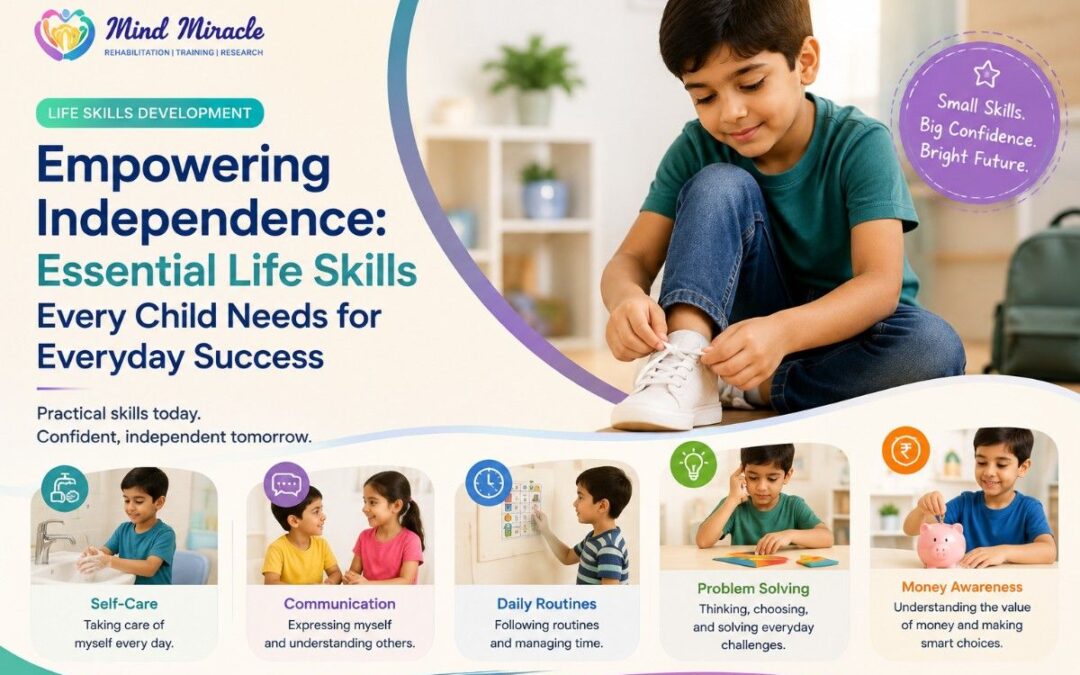
Daily life skills, also known as activities of daily living, are the practical abilities children use to manage everyday tasks independently. These skills extend beyond academics and form the foundation for personal growth, social interaction, and lifelong success.
Examples of daily living skills include:
- Personal hygiene and self-care
- Dressing independently
- Following daily routines
- Communication skills
- Social interaction
- Time awareness
- Money awareness
- Problem-solving
- Organization
- Decision-making
Developing these abilities helps children become more confident, responsible, and prepared for everyday situations.
For children who require additional support, daily living skills therapy provides structured learning experiences that make these tasks easier to understand and practice.
Why Are Life Skills Crucial for Children with Developmental Needs?
Children with developmental differences often face unique challenges in learning everyday skills. Tasks such as brushing teeth, following routines, initiating conversations, or organizing school materials may require additional instruction and repeated practice.
Without structured guidance, these challenges can affect:
- Confidence and self-esteem
- School participation
- Social relationships
- Emotional well-being
- Future independence
This is where Life Skills Development for Children becomes invaluable.
Rather than focusing only on academic success, life skills training equips children with practical tools they can use throughout their lives.
Structured special education life skills programs help children:
- Become more independent in daily activities
- Build confidence through achievable goals
- Reduce dependence on caregivers
- Improve communication
- Strengthen decision-making skills
- Adapt to new environments more easily
Every new skill mastered—whether tying shoelaces, asking for help politely, or managing a daily routine—is a meaningful step toward greater independence.
Core Focus Areas of Life Skills Training
1. Self-Care & Personal Hygiene
Self-care is one of the first steps toward independence. Learning to take care of personal needs helps children build confidence while encouraging responsibility for their own well-being.
Life skills training focuses on:
- Brushing teeth independently
- Washing hands correctly
- Bathing and grooming routines
- Dressing appropriately
- Eating independently
- Organizing personal belongings
- Maintaining healthy habits
These skills not only support physical health but also increase children's confidence in school and social settings.
2. Communication & Social Etiquette
Strong communication skills help children express their thoughts, understand others, and build positive relationships.
Many children benefit from guided practice in developing social skills for kids, including:
- Greeting others politely
- Taking turns during conversations
- Listening actively
- Asking for help appropriately
- Making eye contact
- Sharing with peers
- Understanding personal space
- Showing empathy and kindness
Developing these skills allows children to participate more confidently in classrooms, playgrounds, and community settings.
Positive social experiences also contribute to stronger emotional well-being and lasting friendships.
3. Time Management & Daily Routines
Following routines provides children with a sense of structure and predictability. It also helps reduce anxiety and encourages responsibility.
Life skills training teaches children how to:
- Follow morning and bedtime routines
- Organize school materials
- Complete homework independently
- Understand daily schedules
- Manage transitions between activities
- Recognize the importance of punctuality
- Build simple time awareness
As children become familiar with routines, they develop greater confidence in managing their day with less assistance.
4. Problem-Solving in Everyday Situations
Life is full of unexpected situations, and children benefit greatly from learning how to respond calmly and confidently.
Problem-solving skills help children learn to:
- Think before reacting
- Make safe decisions
- Handle small challenges independently
- Ask for help when needed
- Resolve disagreements peacefully
- Adapt to changes in routine
These experiences encourage resilience, flexibility, and confidence—qualities that support lifelong independence.
Rather than solving every problem for children, therapists and caregivers guide them through the process of finding solutions on their own.
How Families Can Support Skill Building at Home
Parents and caregivers play a vital role in helping children practice life skills beyond therapy sessions. Consistent support at home reinforces learning and helps children apply new skills in real-life situations.
Here are a few practical ways families can encourage building child independence:
Encourage Participation in Daily Tasks
Invite your child to take part in age-appropriate household activities such as:
- Setting the table
- Putting away toys
- Organizing school bags
- Watering plants
- Folding simple laundry
Small responsibilities help children develop confidence and responsibility.
Create Simple Daily Routines
Visual schedules, checklists, or picture charts can make routines easier to follow.
For example:
- Wake up
- Brush teeth
- Get dressed
- Eat breakfast
- Pack school bag
Predictable routines reduce anxiety while promoting independence.
Celebrate Progress, Not Perfection
Every child learns at their own pace.
Praise effort, celebrate small achievements, and recognize progress rather than expecting immediate perfection.
Positive encouragement builds motivation and self-confidence.
Allow Safe Opportunities to Make Choices
Giving children simple choices encourages decision-making and responsibility.
Examples include:
- Choosing between two outfits
- Selecting a healthy snack
- Deciding which homework to complete first
- Picking an activity after school
These everyday decisions strengthen confidence while promoting independence.
How Mind Miracle’s Life Skills Program Helps
At Mind Miracle, we understand that every child's journey is unique. That's why our Life Skills Development Program is carefully designed around each child's individual strengths, goals, and developmental needs.
Our therapists create personalized learning experiences that help children apply practical skills in meaningful, real-world situations.
Our program focuses on:
- Personalized goals based on comprehensive assessments
- Real-world practice that prepares children for everyday situations
- Interactive learning through engaging, age-appropriate activities
- Family collaboration to reinforce learning at home
- Progress tracking with regular reviews and goal adjustments
Whether a child is learning to communicate more effectively, manage daily routines, or develop greater self-confidence, our team provides compassionate guidance every step of the way.
Our ultimate goal is to help children become active, confident participants in their homes, schools, and communities.
Every Small Step Builds a More Independent Future
Independence doesn't happen overnight—it grows one skill, one routine, and one success at a time.
Life Skills Development for Children equips young learners with the practical abilities they need to face everyday challenges with confidence. From personal hygiene and communication to problem-solving and time management, these essential skills lay the foundation for lifelong success.
With consistent support from families, educators, and therapists, children can develop the confidence to become more self-reliant and achieve their fullest potential.
At Mind Miracle, we're passionate about helping children build the skills they need to lead happier, more independent lives.
by Diwakar | Aug 8, 2026 | Therapy
5 Proven Ways Behavioral Therapy Helps Children Build Emotional Regulation and Confidence
Discover how personalized behavioral therapy can help children manage emotions, develop positive behaviors, improve communication, and build confidence in everyday life.
Every child experiences big emotions—but some children need additional support to understand and manage them.
Parents often witness moments when their child struggles to express emotions, follow instructions, or cope with changes in routine. Tantrums, emotional meltdowns, impulsive behavior, and difficulty focusing can be a natural part of development. However, when these behaviors become frequent, intense, or begin affecting a child's learning, relationships, or daily life, it may be time to seek professional support.
The encouraging news is that children can learn healthier ways to understand and manage their emotions. With the right guidance, they can develop stronger communication skills, build confidence, and navigate challenges more successfully.
Behavioral Therapy for Children is an evidence-based approach that helps children develop positive behaviors while reducing those that interfere with learning, social interaction, and emotional well-being. Rather than focusing on punishment, behavioral therapy emphasizes understanding the reasons behind behaviors and teaching practical skills that children can use in everyday situations.
At Mind Miracle, our goal is to help every child thrive by providing compassionate, personalized interventions that strengthen emotional regulation, independence, and confidence.
What is Behavioral Therapy?
Behavioral therapy is a structured, evidence-based approach designed to help children understand their emotions, develop appropriate responses, and build positive behaviors through encouragement, consistency, and practice.
Instead of simply correcting unwanted behaviors, therapists identify why a behavior occurs and teach healthier alternatives that help children succeed at home, in school, and in social settings.
The therapy focuses on:
- Understanding behavior patterns
- Teaching emotional awareness
- Developing self-control
- Improving communication
- Strengthening problem-solving skills
- Encouraging positive habits
One of the most effective components of Behavioral Therapy for Children is the use of positive reinforcement techniques. Rather than emphasizing mistakes, therapists celebrate positive behaviors, motivating children to repeat them and gradually replace challenging behaviors with healthier ones.
Every child is unique, which is why therapy is always tailored to their individual strengths, developmental needs, and personal goals.
5 Key Ways Behavioral Therapy Supports Growth
1. Teaching Healthy Emotional Expression
Young children often experience big emotions but may not yet have the words or skills to express them appropriately. Frustration, disappointment, anxiety, or excitement can quickly lead to crying, yelling, or withdrawal.
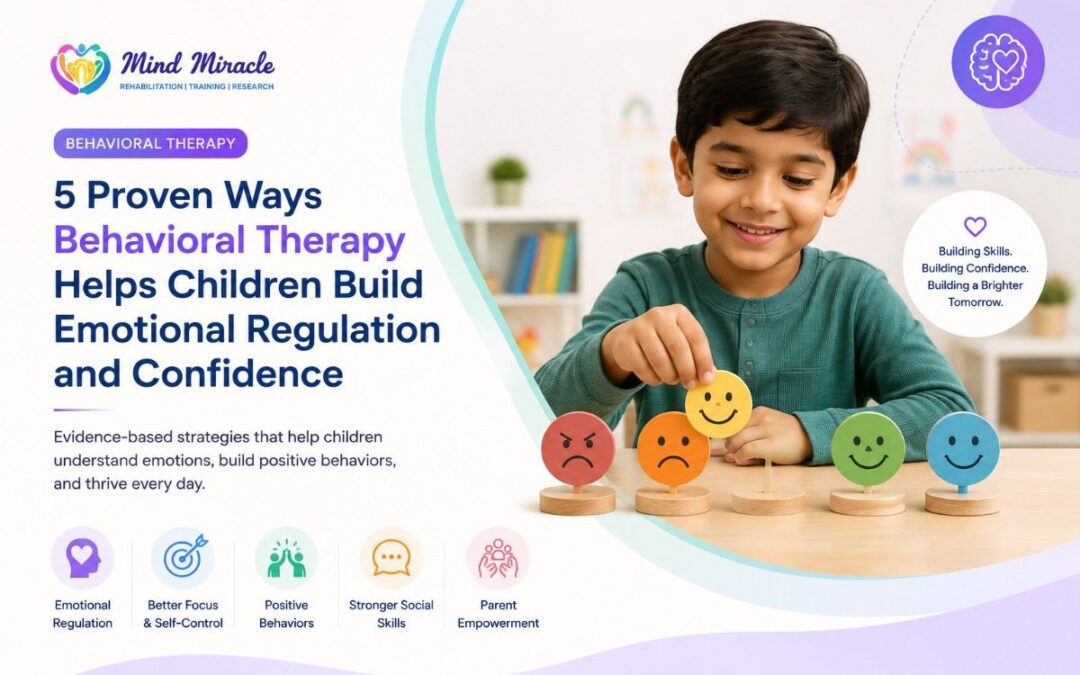
Behavioral therapy helps children build child emotional regulation by teaching them to:
- Recognize different emotions
- Understand emotional triggers
- Express feelings using words
- Practice calming techniques
- Build coping strategies for stressful situations
As children become more aware of their emotions, they gain confidence in handling everyday challenges with greater independence.
Key Insight: Emotional regulation is a learned skill, and with consistent guidance, children can develop healthy ways to respond to difficult situations.
2. Reducing Frustration and Aggressive Behaviors
Children sometimes communicate unmet needs through behaviors such as hitting, throwing objects, screaming, or refusing instructions. These behaviors are often signs of frustration rather than intentional defiance.
Behavioral therapists use evidence-based behavior modification strategies to identify the underlying causes and teach more appropriate alternatives.
Therapy may include:
- Identifying behavior triggers
- Creating predictable routines
- Reinforcing positive choices
- Teaching problem-solving skills
- Encouraging appropriate communication
- Supporting smooth transitions between activities
Over time, children learn that positive behaviors are more effective in helping them communicate their needs and achieve successful outcomes.
3. Improving Attention and Self-Control
Remaining focused during classroom activities or completing daily routines can be challenging for some children, particularly those with developmental or attention-related difficulties.
Behavioral therapy helps improve concentration by teaching children practical strategies to manage distractions and develop self-control.
Common techniques include:
- Breaking tasks into smaller steps
- Visual schedules
- Goal setting
- Reward systems
- Structured routines
- Gentle reminders and prompts
Children gradually become more capable of completing activities independently while building confidence in their abilities.
For children receiving autism behavioral support, these structured approaches can also help reduce anxiety and improve participation in daily routines.
4. Building Social Communication Skills
Friendships and positive social interactions are essential for emotional development, but they don't always come naturally to every child.
Some children may struggle with:
- Starting conversations
- Taking turns
- Understanding social cues
- Sharing with peers
- Maintaining eye contact
- Working in groups
Behavioral therapy creates opportunities to practice these skills in a supportive environment.
Children learn to:
- Communicate their needs appropriately
- Listen and respond to others
- Understand personal boundaries
- Build empathy
- Solve conflicts peacefully
- Participate confidently in group activities
As social confidence grows, children often experience stronger relationships both inside and outside the classroom.
5. Empowering Parents with At-Home Strategies
Parents play one of the most important roles in a child's development. Lasting progress happens when positive strategies are consistently reinforced at home as well as during therapy sessions.
At Mind Miracle, therapy extends beyond the clinic by actively involving families throughout the process.
Parents receive practical guidance on:
- Using positive reinforcement techniques at home
- Managing challenging behaviors calmly
- Establishing predictable routines
- Encouraging independence
- Supporting emotional regulation during daily activities
- Reinforcing therapy goals consistently
This partnership helps children experience a more consistent environment, allowing new skills to become part of everyday life.
Key Insight: When parents and therapists work together, children are more likely to achieve meaningful and lasting progress.
The Mind Miracle Approach
At Mind Miracle, we believe that every child has unique strengths, abilities, and learning styles. That's why no two therapy plans are the same.
Our approach begins with a comprehensive assessment that helps us understand each child's developmental profile, behavioral patterns, communication abilities, and individual goals.
Based on this assessment, we develop a personalized intervention plan that focuses on meaningful, measurable outcomes.
Our behavioral therapy programs include:
- Individualized intervention plans tailored to each child's needs
- Evidence-based therapeutic techniques
- Age-appropriate learning activities
- Positive reinforcement and motivation
- Family-centered care and parent coaching
- Regular progress reviews and goal adjustments
Our experienced therapists work closely with families, educators, and other professionals to ensure consistency across all environments.
Whether a child requires support with emotional regulation, attention, social communication, or autism behavioral support, our goal is always the same—to help them build confidence, independence, and lifelong skills.
Frequently Asked Questions (FAQ)
At what age should a child start behavioral therapy?
There is no single "right" age to begin therapy. Behavioral therapy can benefit children as soon as developmental or behavioral concerns begin affecting their daily life, learning, or social interactions.
Early intervention is often associated with better long-term outcomes because children develop important emotional, communication, and behavioral skills during their early years.
If you're unsure whether your child may benefit, a professional assessment can help determine the most appropriate course of action.
How are parents involved in the therapy sessions?
Parents are an essential part of the therapeutic process.
At Mind Miracle, we encourage active family participation through:
- Regular progress updates
- Parent coaching sessions
- Home-based activity recommendations
- Practical behavior management strategies
- Collaborative goal setting
- Guidance for supporting therapy at home
This collaborative approach helps ensure children receive consistent support across home, school, and therapy settings, maximizing their opportunities for success.
Helping Children Grow with Confidence
Every child deserves the opportunity to learn, communicate, and thrive in a supportive environment. While behavioral challenges can feel overwhelming, they are also opportunities to build lifelong skills with the right guidance.
Behavioral Therapy for Children goes beyond managing behaviors—it helps children understand their emotions, strengthen relationships, improve communication, and develop the confidence to face everyday challenges.
At Mind Miracle, we are committed to providing compassionate, evidence-based care that empowers children and supports families throughout their journey.